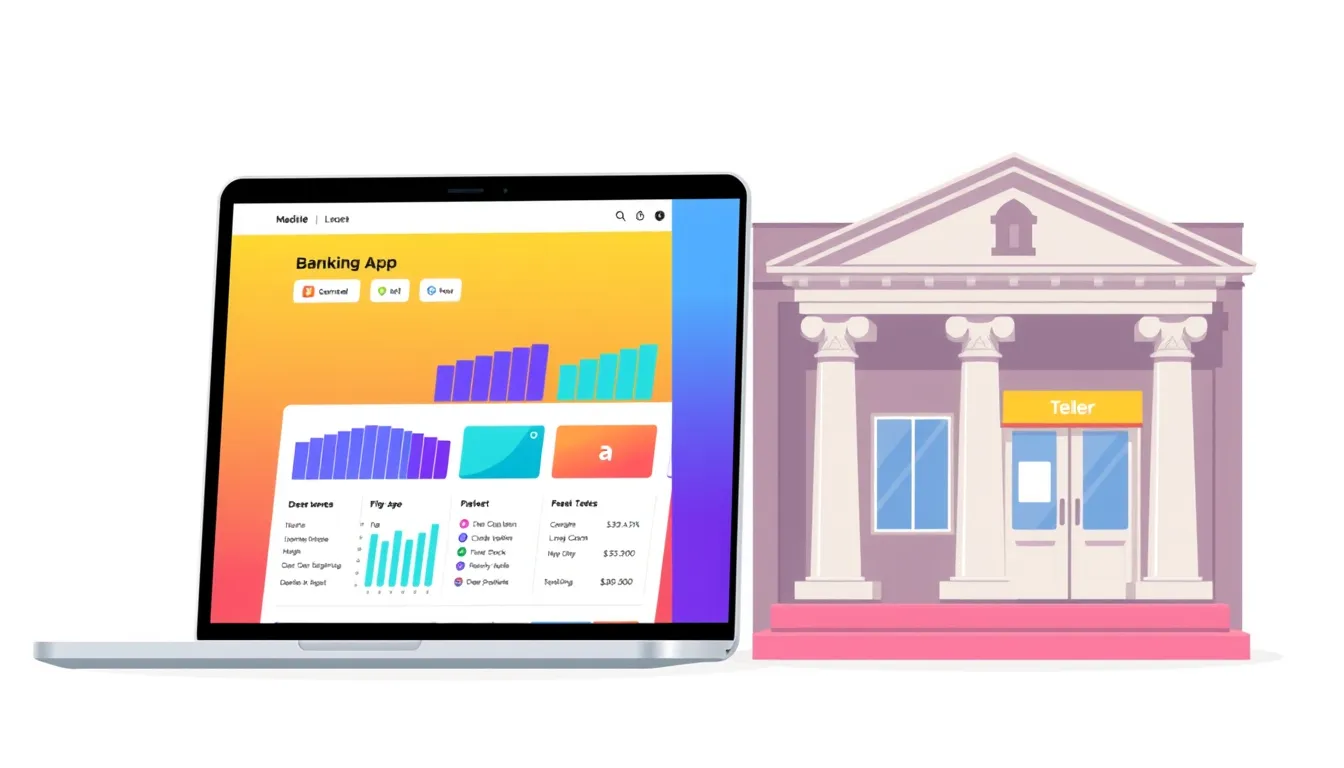
If you manage your money daily, juggle multiple accounts, or are thinking about moving your savings, this guide is for you. It helps anyone who wants a banking setup that matches their spending rhythm and risk comfort.
Using a step‑by‑step framework, you’ll determine whether an online‑only bank or a brick‑and‑mortar branch delivers the lowest friction for your digital banking habits, fees, and support expectations.
When you finish, you’ll have a concrete action plan, a checklist of red flags, and confidence to choose the right side of Online Banks vs. Traditional Banks without second‑guessing.
Assess Your Banking Habits and Needs
Start by auditing your current banking behavior to identify which model reduces daily friction. This self-assessment reveals whether you rely on physical infrastructure or digital efficiency.
- Count your branch visits. Track how often you physically enter a brick-and-mortar branch over a month. If you visit weekly or more, traditional banks likely serve your lifestyle better. If you go once a quarter or less, online-only banks may offer superior convenience without unused overhead costs.
- Identify in-branch tasks. List specific services you use at the counter, such as cash deposits, notary services, or meeting with a financial advisor. If your list includes complex, in-person interactions, digital banking alone may create friction. If you primarily handle transactions online, the lack of physical locations becomes irrelevant.
- Determine your primary banking goal. Decide if your focus is savings growth, checking convenience, or loan management. If maximizing APY is critical, online-only banks often compete on rates. If ease of access for large deposits or specialized loan consultations matters more, traditional banks provide tangible advantages.
This audit creates a clear profile of your needs. Match this profile against the structural strengths of each banking type to find the lowest-friction option for your specific financial habits.
Compare Costs, Rates, and Financial Benefits
Now that you know which features matter most to you, turn the focus to the money you’ll actually keep or earn. The following three steps let you quantify the economic gap between online-only banks and traditional banks.
- Map the fee landscape. List monthly maintenance fees, overdraft charges, and wire‑transfer costs for each institution you’re considering. Result: You see the baseline cost of holding an account, which often reveals hidden drags on your balance.
- Compare APY on savings and money‑market accounts. Record the advertised Annual Percentage Yield for comparable balances. Result: You calculate the extra earnings you could capture by choosing the higher‑yield option.
Check loan and credit‑card terms. Note interest rates, origination fees, and any rewards or cash‑back structures. Result: You understand how each model may affect borrowing costs or supplemental income.
Common mistake: Assuming “no‑fee” means “no cost.” Many online-only banks offset low fees with lower rates on loans, while some brick‑and‑mortar branches bundle fees with higher APY or better loan terms. Evaluate the full picture before declaring a winner in the Online Banks vs. Traditional Banks debate.
Evaluate Customer Support and Service Accessibility
Start by identifying which support channels you actually use. Do you prefer immediate answers via live chat, the personal touch of a phone call, or the convenience of email? Traditional banks often excel with in-person branch access, while online-only banks typically rely on digital banking tools. List your top two preferred Customer support channels to establish a baseline.
Next, consider the complexity of issues you might face. Simple queries like balance checks are handled easily by either model. However, complex problems such as fraud investigation, transaction disputes, or account closures often require human intervention. Determine if your preferred bank offers a direct line to a human representative for these scenarios, rather than forcing you through automated systems indefinitely.
Finally, assess availability during your active hours. If you manage finances late at night or on weekends, check if support is accessible then. Traditional banks have limited branch hours, whereas digital banking platforms often provide 24/7 chat or phone support. This step clarifies exactly when you can get help.
Result: You have a realistic expectation of how problems will be resolved and when you can reach assistance. Common mistake: Ignoring after-hours support policies. Many users assume 24/7 availability but discover that complex issues are only handled during standard business hours, causing significant delays.
Review Security and Account Protection Features
A common misconception is that digital-only institutions are inherently less secure. In reality, both online-only and traditional banks operate under the same regulatory standards. The primary difference lies in how you interact with their security protocols, not the strength of the underlying protections.
Step 1: Verify Insurance Coverage. Check the bank’s website or promotional materials to confirm FDIC or NCUA insurance status. This guarantees your deposits are protected up to the standard limit. Do not assume coverage; explicit confirmation is required for both brick-and-mortar branches and digital platforms. Result: You know your funds are federally insured regardless of the bank type.
Step 2: Audit Digital Security Tools. Compare features like multi-factor authentication, biometric login options, and real-time fraud monitoring. Look for instant transaction alerts and easy-to-use app controls for freezing cards. Result: You identify which institution offers the most intuitive layer of defense for your specific device usage.
Step 3: Map the Reporting Process. Understand the exact steps to report lost cards or unauthorized transactions. Note whether you must call a dedicated line or use the mobile app. Result: You have a clear, immediate action plan for emergencies, reducing stress during potential fraud incidents.
Common Mistakes to Avoid When Switching Banks
Transitioning between institutions requires precision to avoid unintended financial penalties. Start by auditing all recurring transactions. Failure to update direct deposits and automatic payments is the most frequent error. If you switch institutions but leave your employer or utility providers pointing to the old account, you risk bounced checks and late fees. Verify every single transaction before closing the previous account.
Next, address the fate of your former account. Many people leave old accounts open with insufficient balances, triggering Overdraft fees or monthly maintenance charges. Once all funds and transfers are complete, formally close the account in writing. Do not simply stop using it. Letting it sit dormant can lead to unexpected fees that erode your savings.
Do not assume all Online-only banks provide the same Digital banking experience. User interfaces vary significantly in navigation, clarity, and speed. Test the mobile app and web portal thoroughly before committing. A confusing interface creates friction in daily money management, negating the benefits of lower costs.
Finally, acknowledge the limitations of Online Banks. They typically lack Brick-and-mortar branches, meaning you cannot walk in to deposit cash. If you regularly receive cash payments, verify that your chosen bank supports third-party deposit services or has partner locations. Ignoring this constraint can make managing physical currency a logistical headache. By avoiding these pitfalls, you ensure a smooth transition without financial hiccups.
Step-by-Step Guide to Making the Switch
- Open the new account and verify identity. Complete the digital onboarding process for your chosen Online-only bank or Traditional bank. Submit required identification documents immediately. Result: Your account is active and ready to receive funds.
- Link the old account for transfer. Connect your existing bank details to the new platform to enable direct transfers. Test with a small amount if possible. Result: A secure channel exists for moving money between institutions.
- Update direct deposits and recurring payments. Notify employers and service providers of your new account number. Prioritize high-value transactions like payroll and rent. Result: Future income and bills flow directly to the new account.
- Transfer remaining balances. Move all leftover funds from the old institution to the new one. Ensure all pending transactions have cleared first. Result: All financial assets are consolidated in the new setup.
- Close the old account formally. Submit a written closure request to the previous bank. Confirm final statements show a zero balance. Result: The old relationship is terminated, completing your migration to the new digital banking environment.